

Vatican, China Sign Landmark Pact, Step Toward Diplomatic Ties

published Sep 22, 2018, 8:22:38 AM, by John Follain and Dandan Li
(Bloomberg) —
The Vatican signed a landmark agreement with China on the appointment of bishops in the country, a step that may lead to restoring diplomatic relations after more than 60 years.
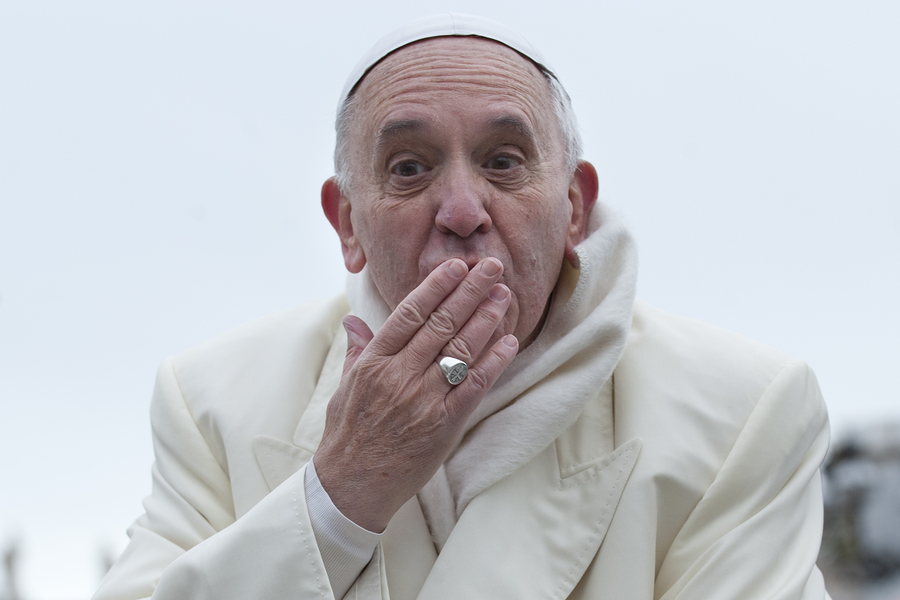
The deal, which follows long negotiations spearheaded by Pope Francis, was reached after years of concern by the Catholic Church about the officially atheist nation’s treatment of religious freedom. Antoine Camilleri, the Vatican’s undersecretary for relations with states, and Chinese deputy foreign minister Wang Chao signed the deal in Beijing on Saturday, according to an emailed statement.
The agreement “concerns the nomination of bishops, a question of great importance for the life of the Church, and creates the conditions for greater collaboration at the bilateral level,” the Vatican said. The deal will allow “the faithful to have bishops who are in communion with Rome but at the same time recognized by Chinese authorities,” Vatican spokesman Greg Burke said.
Agreeing to a long-standing demand by Beijing, the Vatican said Saturday it agreed to formally recognize eight excommunicated Chinese bishops, one of them now deceased, who had been appointed by the government without the pope’s approval.
Relations between the Vatican and China were broken off in 1951. Reaching a settlement with the Communist Party has proved elusive, especially as President Xi Jinping presides over the most widespread crackdown on religious freedom since it was written into the country’s constitution in 1982. Chinese authorities have jailed Catholic priests, destroyed churches and cut crosses from the tops of churches.
Underground Church
The estimated 12 million Catholics in China are currently divided between the Catholic Patriotic Association, a state-run authority where the government names the bishops, and an “underground” church loyal to the pope.
China’s foreign ministry said in a statement that “the two sides will continue to maintain communication and push forward the improvement of bilateral relations.”
Both sides will have a say in appointing the Church’s bishops in China. Proposed bishops will be picked by elections and the bishops’ conference in China, then put forward to the pope, who will have power of veto, according to a person familiar with the issue who was not authorized to comment publicly.
Taiwan Ties
The agreement may have repercussions for democratically-run Taiwan, which counts the Vatican as one of its remaining diplomatic allies. Beijing has been wooing countries away from recognizing Taiwan since the island elected a president from a pro-independence party in 2016.
Taiwanese Foreign Minister Joseph Wu told Bloomberg News on Aug. 24 that the island was watching China’s efforts to boost ties with the Church. He argued that now wasn’t the time for the Vatican to switch allegiances, since “there are more and more Catholics in China that are being persecuted.”
Even before it was reached, the agreement faced opposition from within the Church. Cardinal Joseph Zen — the retired but still outspoken former archbishop of Hong Kong — told Bloomberg News last month that he cautioned Francis in July that such a deal may create a schism among the local faithful.
“I said that, ‘I’m really worried not about you, Your Holiness, but about the people around you,’” Zen said, citing a letter he sent to the pope. “I said, ‘The things your collaborators are doing’ — and I used a really bad Italian word, macchinando [plotting] — ‘will have tragic and long-lasting effects, not only for the Church in China, but for the whole Church.’”
–With assistance from Christopher Kingdon.To contact the reporters on this story: John Follain in Rome at jfollain2@bloomberg.net ;Dandan Li in Beijing at dli395@bloomberg.net To contact the editors responsible for this story: James Amott at jamott@bloomberg.net Keith Campbell, Adveith Nair
COPYRIGHT
© 2018 Bloomberg L.P
The Author







No Comment